

In this post:
How to use the sourdough focaccia recipe
Soughdough Focaccia Recipe
List of Ingredients
Timetable
Room Temperature Proofing
Fridge Temperature Proofing
Instruction
Starter or leaven — what’s the difference, and does it even matter?
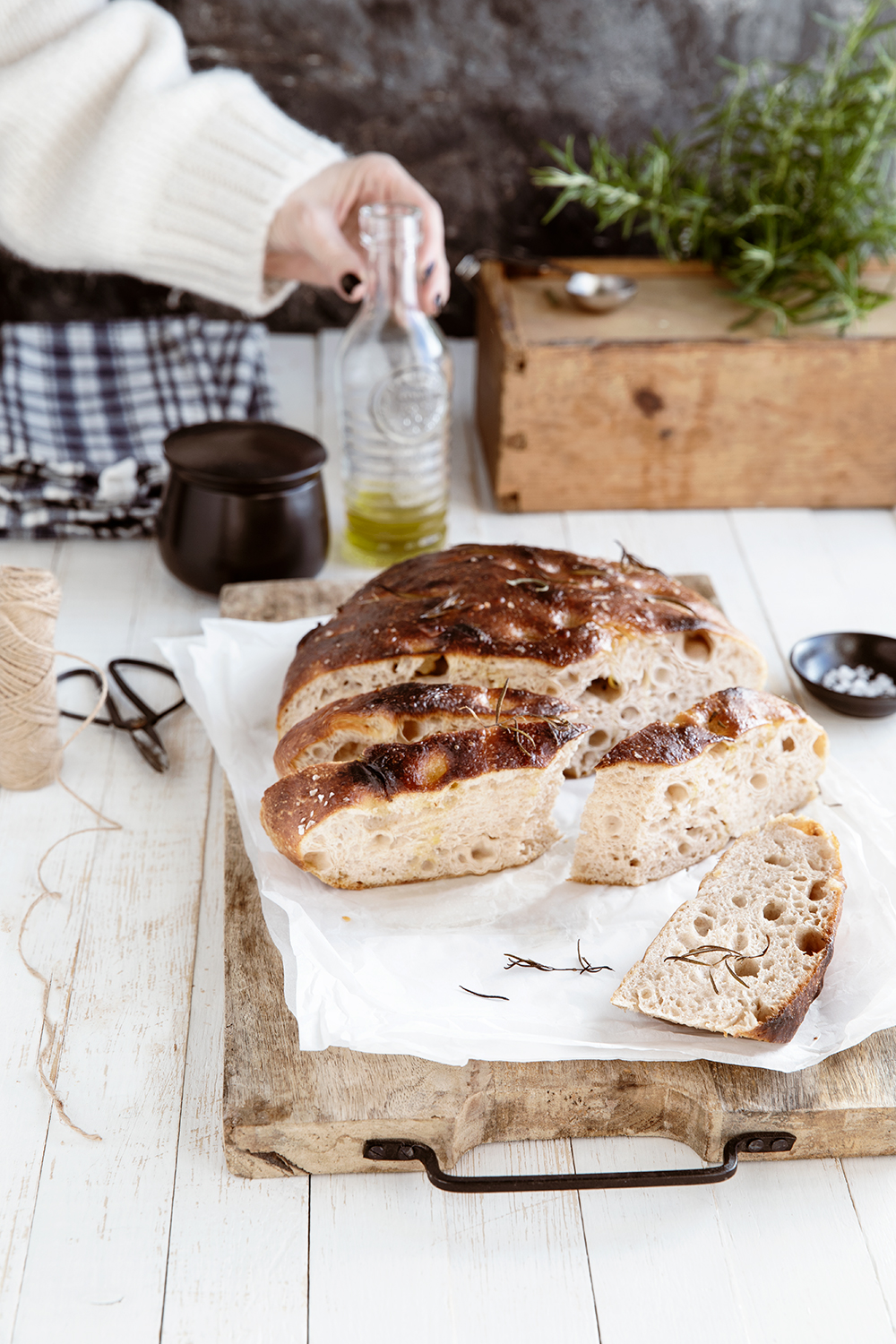
Let’s congratulate Chris by baking sourdough focaccia!
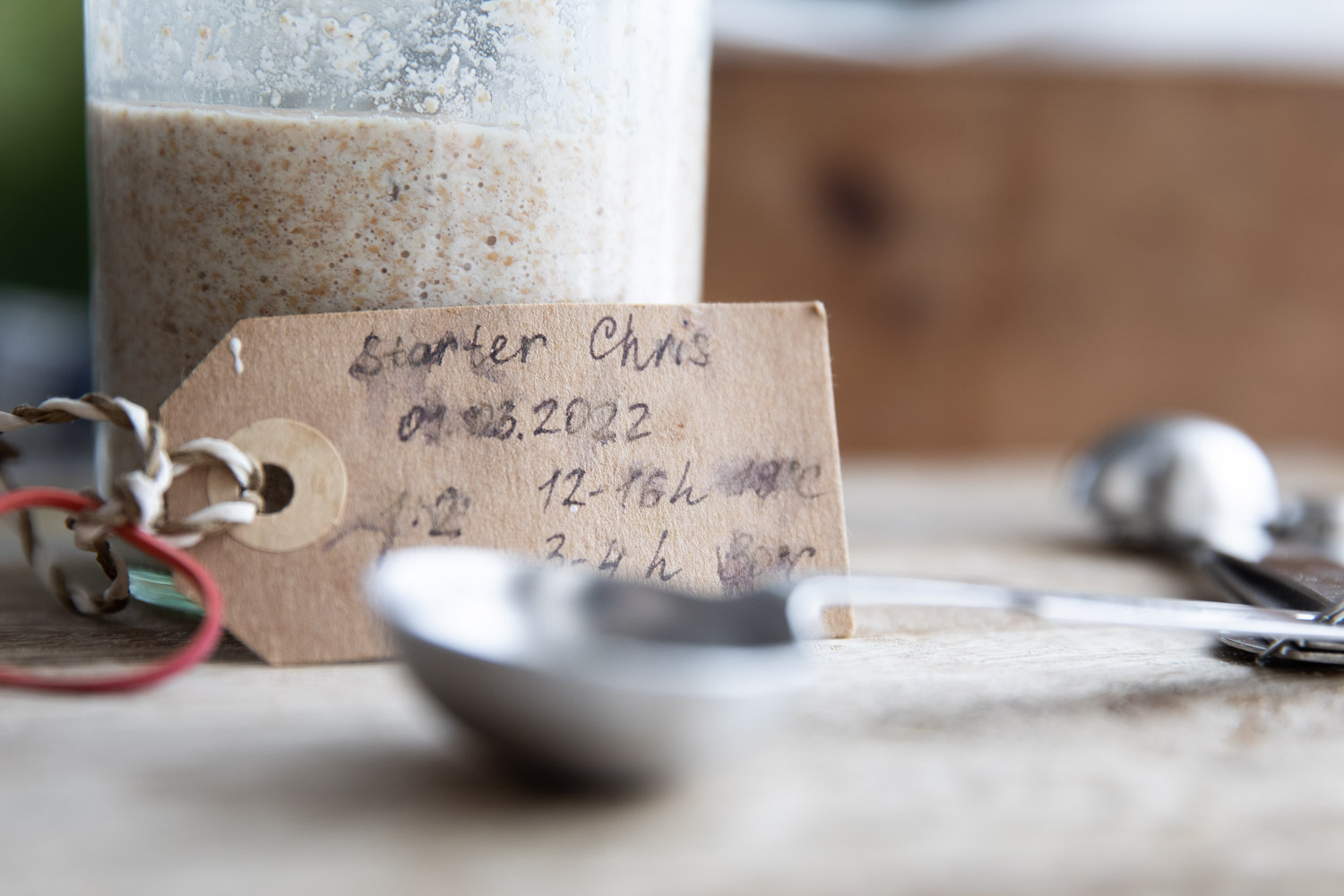
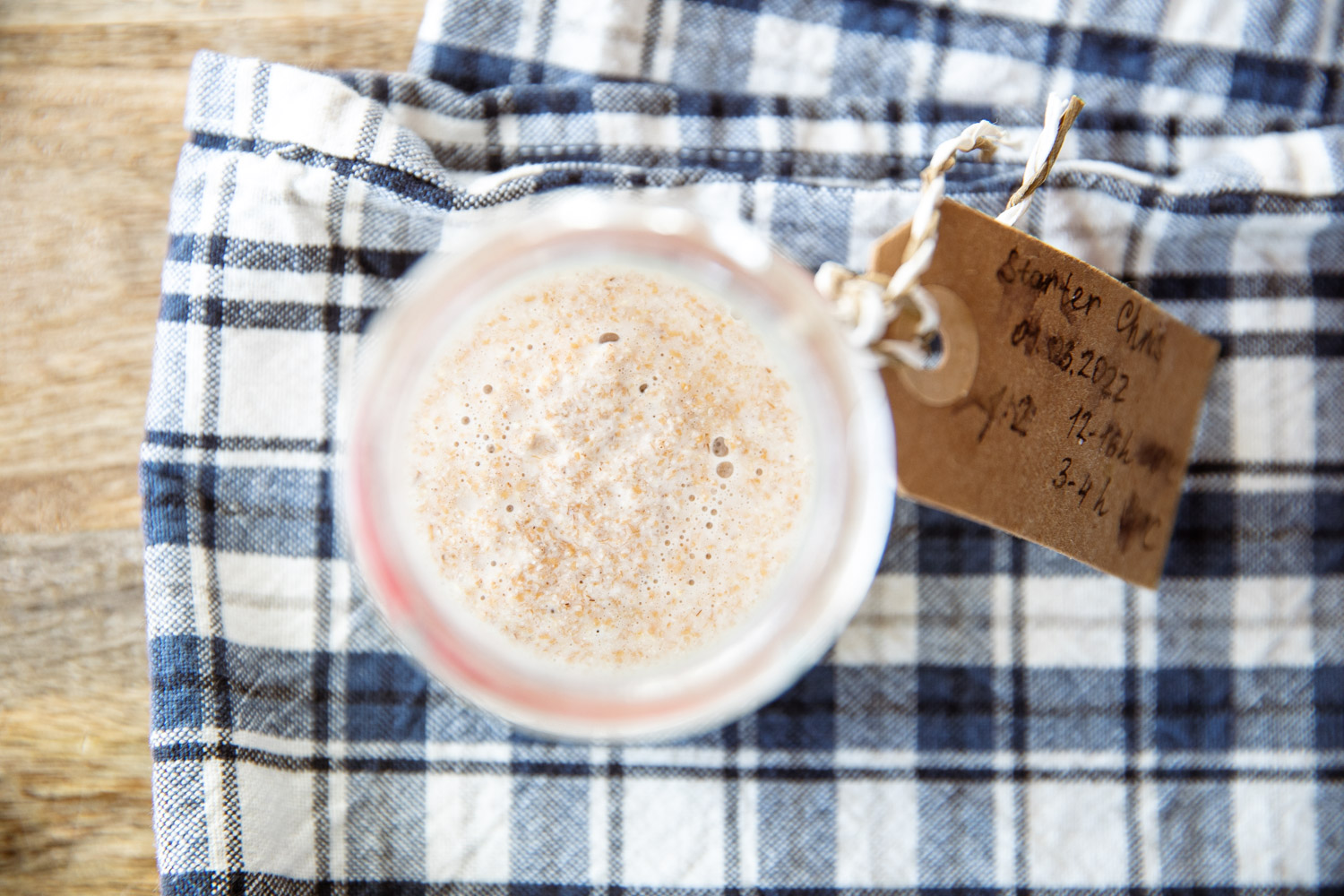
Who is Chris? This is my leaven, I started it, as ensue on the label, in 2022. Chris is my third version (firsts were Albert and Benedict) of leaven which has become effective and easy in using, i.e feeding and baking.

This label is pretty dingy (it would be nice to rewrite it already), but if you look closely you will see, that Chris should be feed twice a day at 19 °C. For more details about Chris’s story have a look at this post.
But let’s continue the theme of sourdough focaccia. Now it is baked almost every day for breakfast in my home. Due to the fact that I am a morning person, getting up early in the morning is not so difficult. A small slice is good with tomatoes and rosemary, while a larger piece is a great base for a school lunch.
Join us.
How to use the sourdough focaccia recipe
Baker’s percentages
In baking 100% is always taken as all the flour used, please anchor this thought. What does it mean? It means that 500 g flour from the followed recipe are equal to 100%.
Dough moisture
Another key point is that the recipe below is based on a 74% moisture dough, i.e. there are 74% water in the dough. 74% of 500 g is 370 g. Hope that’s understandable.
Why should you use 500 g of flour? Good news: you shouldn’t 🙂 I use 500 g flour because this size works well for me, but you can recalculate according to your needs, mixer bowl volume, etc. just knowing the dough’s moisture.
There are some examples there:
| 100% Flour | 74% Water | How to calculate |
| 500 g | 370 g | 500*74/100 |
| 600 g | 444 g | 600*74/100 |
| 700 g | 518 g | 700*74/100 |
Flour
You are free in using types of flour other than those mentioned below. It is only important that the total weight of the flour is 500 g (as in my case). For instance I use sometimes 300 g Rustique, 150 g tipo “00” and 50 g Dinkel spelt.
Sourdough Focaccia
74% moisture
Ingredients
300 g Rustique flour by Finax
100 g Tipo “00” flour by Finax or flour with high protein (W=350 or more)
100 g medium flour
370 g water (74%)
130 g (starter)
10 g salt
30 g cold butter or the same weight of olive oil for vegan version
50 ml olive oil extra virgin for drizzling
Topping
Olives, tomato, rosemary, coarse sea salt etc.
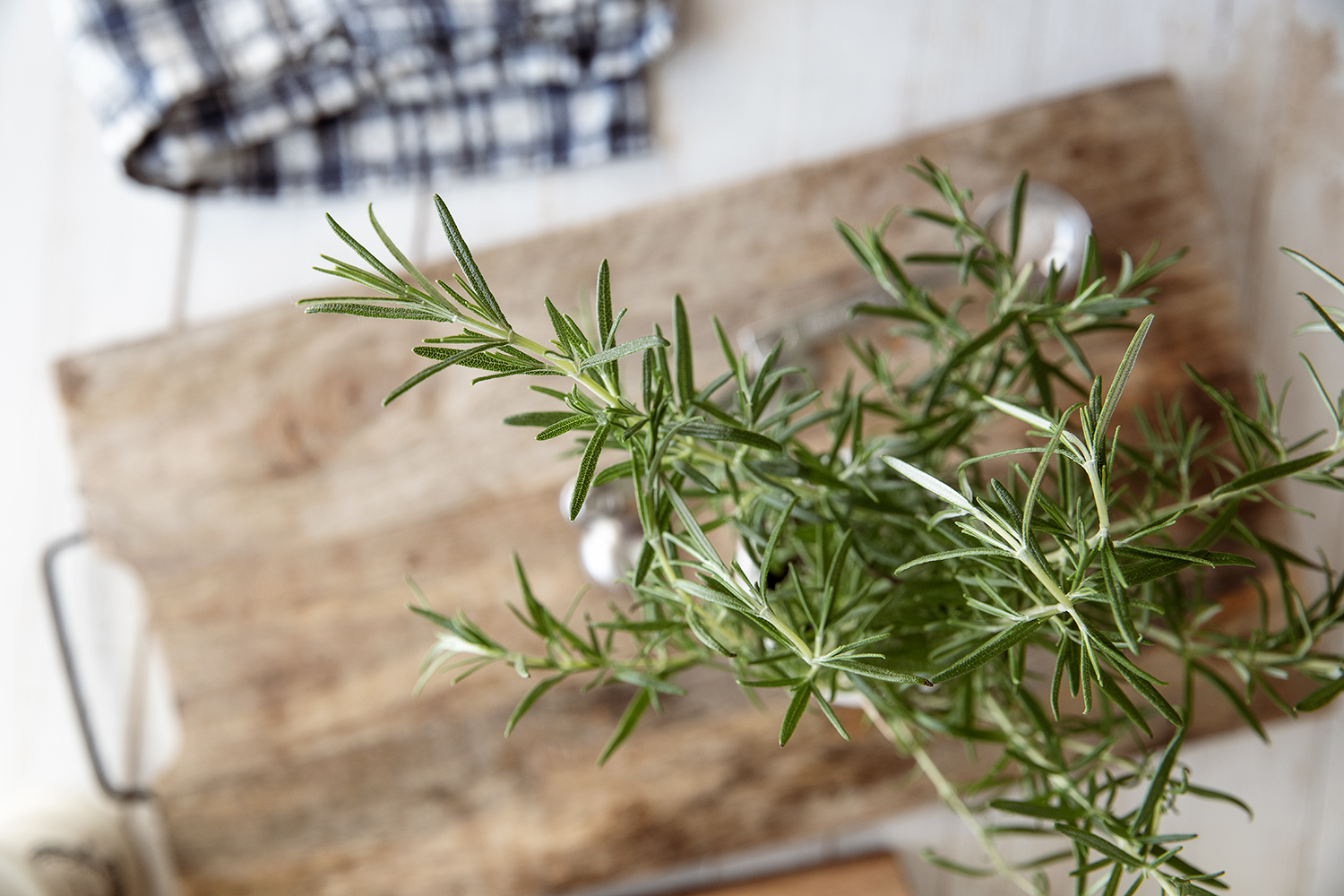
Equipment
Mixer or bread maker in this role, proofer (optional), oven.
Timetables
I would like to offer two schedule options: Room Temperature Proofing (RTP) and Fridge Temperature Proofing (FTP) so that you can choose the one that best suits your daily routine. I personally prefer use RTP during winter and FTP in summer.
Room Temperature Proofing
13:00 Leaven’s feeding
17:00-17:30 Autolyse
17:30-18:00 Kneading
[18:00-18:30 Fermentation
18:30 Stretch-and-fold]*4
20:00 Shaping
20:00-06:00 next morning Proofing
06:00-06:25 Baking
Fridge Temperature Proofing
20:00 Leaven’s feeding
06:00-06:30 next morning Autolyse
06:30-07:00 Kneading
[07:00-07:30 Fermentation
07:30 Stretch-and-fold]*4
09:00 Shaping
09:00-20:00 Proofing in fridge
20:00-06:00 next morning Proofing at room temperature
06:00-06:25 Baking
Method
1. Levean feeding
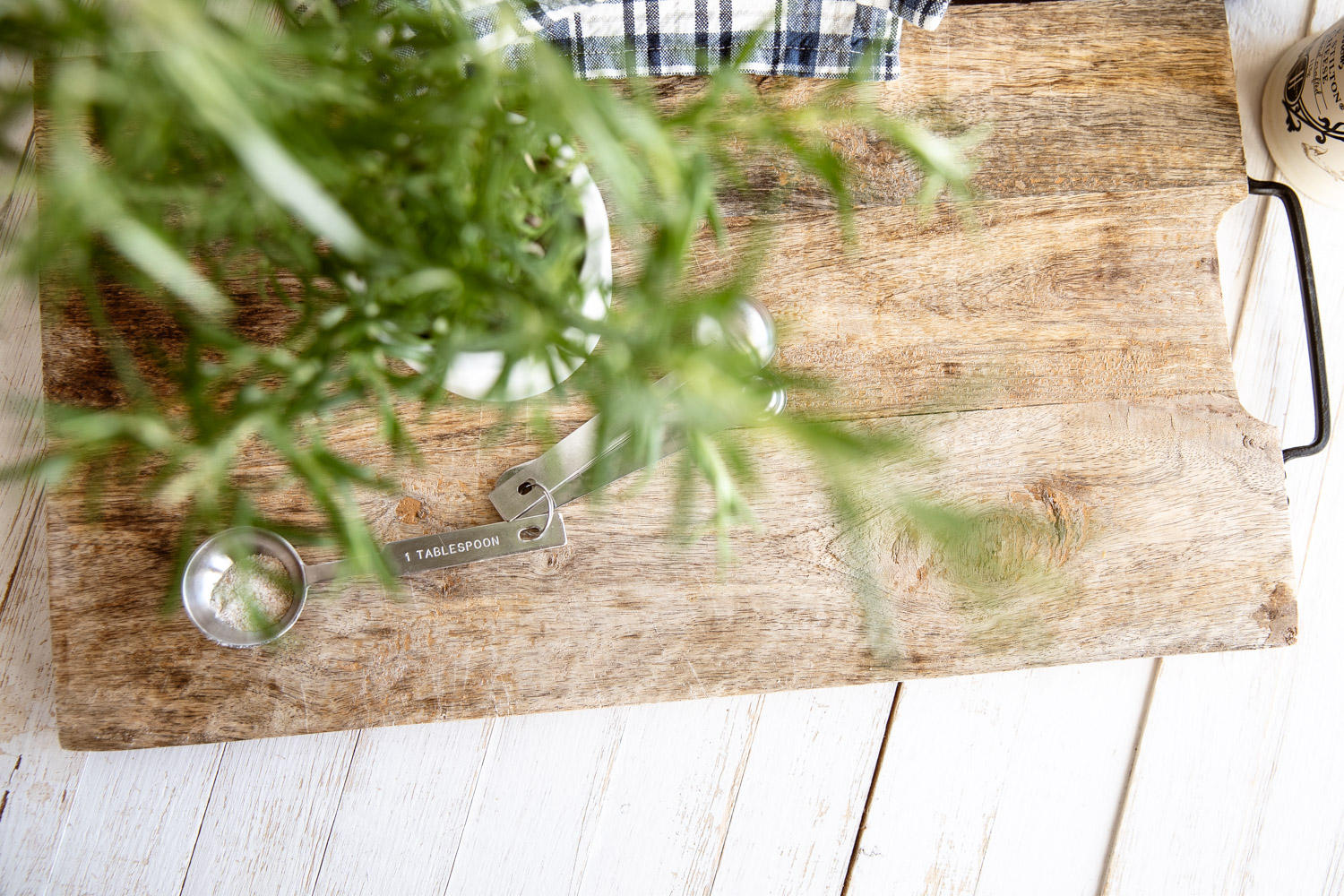
Be sure, that your starter is healthy and strong, i.e. it has a good smell, full of bubbles and its color is no changed since last feed. Feed it with 90 ml of water (~6 tablespoons) and 90 ml of flour. My Chis is usually ready for next step within 4 hour at 28 °C.
Work with Me
Want images like these for your menu, social media
or packaging?
Contact me.
2. Autolyse
Mix until incorporated water and all types of flour in a bowl. Afterward set aside for 30-120 min.
3. Kneading
Add starter and knead about 15 minutes, then add salt and butter. After that knead additional 15 minutes.
4. Rest (fermentation)
Drizzle glass bowl with olive oil, put the dough into the bowl and set aside for 30 minutes by 28-30 °C. I use poofer box for it.
5. Stretch-and-fold
Stretch and fold the sourdough. Basically it means that you form a roll by lifting the top third of the dough, and then pulling it up and starting to roll the sourdough away from you, then lift it again, stretch it and twist it. After that when all the dough is rolled up, turn the bowl an 90° degrees, lift the roll up by the middle, let it sag a little by gravity, and then fold it cut-side down three times.
6. Rest (fermentation)
Rest it for fermentation for 30 minutes at 28-30 °C. Use proofer if it is possible.
As soon as previous step is comlete repeat 5th and 6th steps one by one 3-4 times until dough will become elastic and quite dense immediately after stretching and folding.
7. Proofing
Put the sourdough into a baking dish and set aside for about 8 hours at 21 °C. In Finnish winter this means room temperature.
8. Baking
Preheat oven until 260 °C.
Afterward drizzle the dough with olive oil, put topping and salt.
Reduce the temperature to 240 °C
Bake for 18 minutes, then reduce the temperature to 220 °C and bake for another 10 minutes. However focus on your oven.
Finally you can’t ruin focaccia with oil so drizzle the dough with olive oil one more time.
Starter or leaven — what’s the difference, and does it even matter?
Both words mean a living mix of flour and water that makes your bread rise without commercial yeast. In American recipes you’ll usually see starter; in older European books and artisan circles, leaven or levain pops up more often.
I call the jar whose contents I feed on standby the sourdough starter, and the specially set aside, refreshed, ready-to-bake portion the leaven.

Sourdough Focaccia, 74% moisture
Equipment
- Mixer or bread maker in this role
- Proofer optional
Ingredients
- 300 g Rustique flour by Finax
- 100 g Tipo "00" flour by Finax or flour with high protein (W=350 or more)
- 100 g medium flour
- 370 g water
- 130 g leaven
- 10 g salt
- 30 g cold butter OR 30 g olive oil
- 50 g olive oil extra virgin for drizzling
Instructions
Levean feeding (making starter)
- Be sure, that your starter is healthy and strong, i.e. it has a good smell, full of bubbles and its color is no changed since last feed. Feed it with 90 ml of water (~6 tablespoons) and 90 ml of flour.
Autolyse
- Mix until incorporated water and all types of flour in a bowl. Afterward set aside for 30-120 min.
Kneading
- Add starter and knead about 15 minutes, then add salt and butter. After that knead additional 15 minutes.
Rest (fermentation)
- Drizzle glass bowl with olive oil, put the dough into the bowl and set aside for 30 minutes by 28-30 °C. I use poofer box for it.
Stretch-and-fold
- Stretch and fold the sourdough. Basically it means that you form a roll by lifting the top third of the dough, and then pulling it up and starting to roll the sourdough away from you, then lift it again, stretch it and twist it. After that when all the dough is rolled up, turn the bowl an 90° degrees, lift the roll up by the middle, let it sag a little by gravity, and then fold it cut-side down three times.
Rest (fermentation)
- Rest it for fermentation for 30 minutes at 28-30 °C. Use proofer if it is possible. As soon as previous step is comlete repeat 5th and 6th steps one by one 3-4 times until dough will become elastic and quite dense immediately after stretching and folding.
Proofing
- Put the sourdough into a baking dish and set aside for about 8 hours at 21 °C. In Finnish winter this means room temperature.
Baking
- Preheat oven until 260 °C. Afterward drizzle the dough with olive oil, put topping and salt. Reduce the temperature to 240°CBake for 15 minutes, then reduce the temperature to 220°C and bake for another 10 minutes. However focus on your oven.
- Finally you can’t ruin focaccia with oil so drizzle the dough with olive oil one more time.
More sourdough recipes in this blog

Sourdough Hot Cross Buns – How to Make Easter Healthy and Tender

How to Make Gourgeous Sourdough Brioche Based on Lievito Madre
