'/%3E%3C/svg%3E)

In this post:
Recipe of Easy Raisin and Walnut Cake
List of Ingredients
Instruction
Tips and Notes
Variations
Serving
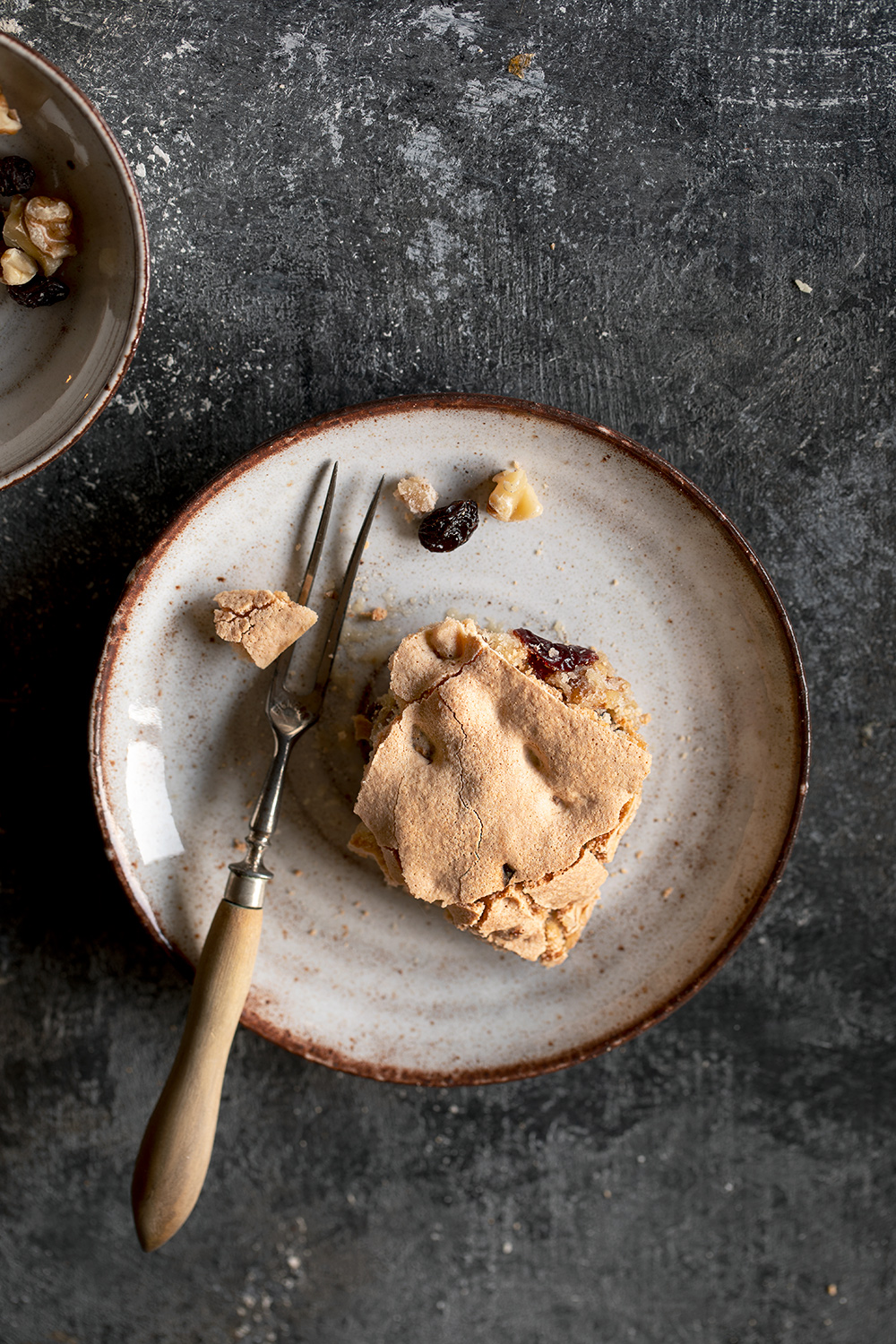
A golden-brown, aromatic crust that cracks with a distinctive sound at the first bite. This easy Mazurka cake is a nostalgic raisin and walnut traybake, with a texture that sits somewhere close to a substantial fruit-and-nut bar. It is simple enough for an everyday tea table but distinctive enough to become one of those family recipes that stays with you for years.
A Cake from My Childhood
Mazurka is one of the cakes I remember from childhood. For some reason, it was always baked in the same brown metal tin.
Perhaps that detail has nothing to do with the recipe itself, but memory rarely separates food from the things that surrounded it: the colour of a baking tin, the sound of a knife cutting through the still-warm cake, the familiar diamond-shaped pieces arranged on a plate.
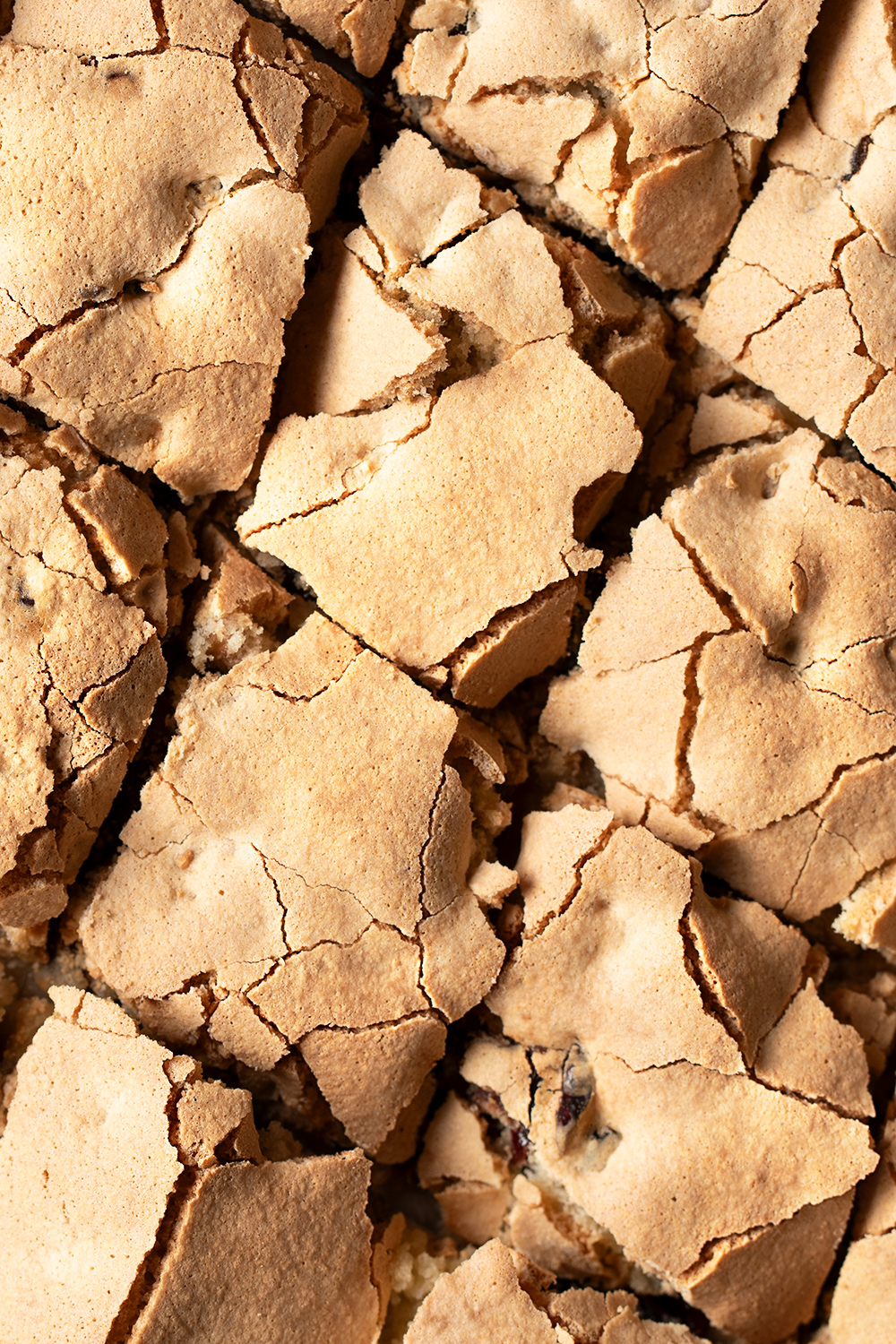
Our Mazurka was usually made with raisins and walnuts, probably because they were the easiest and most readily available additions. Today I often replace the raisins with dried cranberries, whose tartness balances the sweetness of the batter. Pecans can also be used instead of walnuts for a softer, more buttery flavour.
What Is Mazurka Cake?
In my family, Mazurka is a simple fruit-and-nut cake baked in a shallow rectangular tin and cut into diamonds while it is still warm.
The batter contains almost as much fruit and nuts as flour, which gives the cake its characteristic substantial texture. It is not a delicate, airy sponge, nor is it quite a cookie or a conventional fruitcake. It occupies its own small category somewhere in between.
It is also remarkably simple: eggs, sugar, flour, salt, raisins, and nuts. No butter, no oil, no complicated equipment, and no elaborate decoration.
Easy Raisin and Walnut Cake
A Childhood Mazurka Recipe
Ingredients
3 large eggs, preferably at room temperature
220 g sugar
150 g all purpose flour
100 g walnuts, coarsely chopped
130 g raisins
a pinch of salt
Method
1. Preheat the oven to 180°C / 350°F.
2. Line a 20 × 30 cm rectangular baking tin with parchment paper, leaving a little overhang at the sides if you would like to lift the cake out more easily.
3. Rinse the raisins and pat them thoroughly dry with a clean kitchen towel or paper towels. Any excess water can make the batter unnecessarily wet.
4. Coarsely chop the walnuts. The pieces should be small enough to distribute evenly through the cake but large enough to remain visible in the finished crumb.
5. Place the eggs and sugar in a large mixing bowl.
6. Beat with an electric mixer until the mixture becomes very pale and thick. Depending on the mixer, this will usually take approximately 3-5 minutes.
7. Sift the flour together with the salt.
8. Add it to the egg mixture in two or three additions, folding gently with a spatula after each one. Use broad movements from the bottom of the bowl upwards and stop as soon as no dry streaks remain.
9. Fold in the chopped walnuts, followed by the raisins.
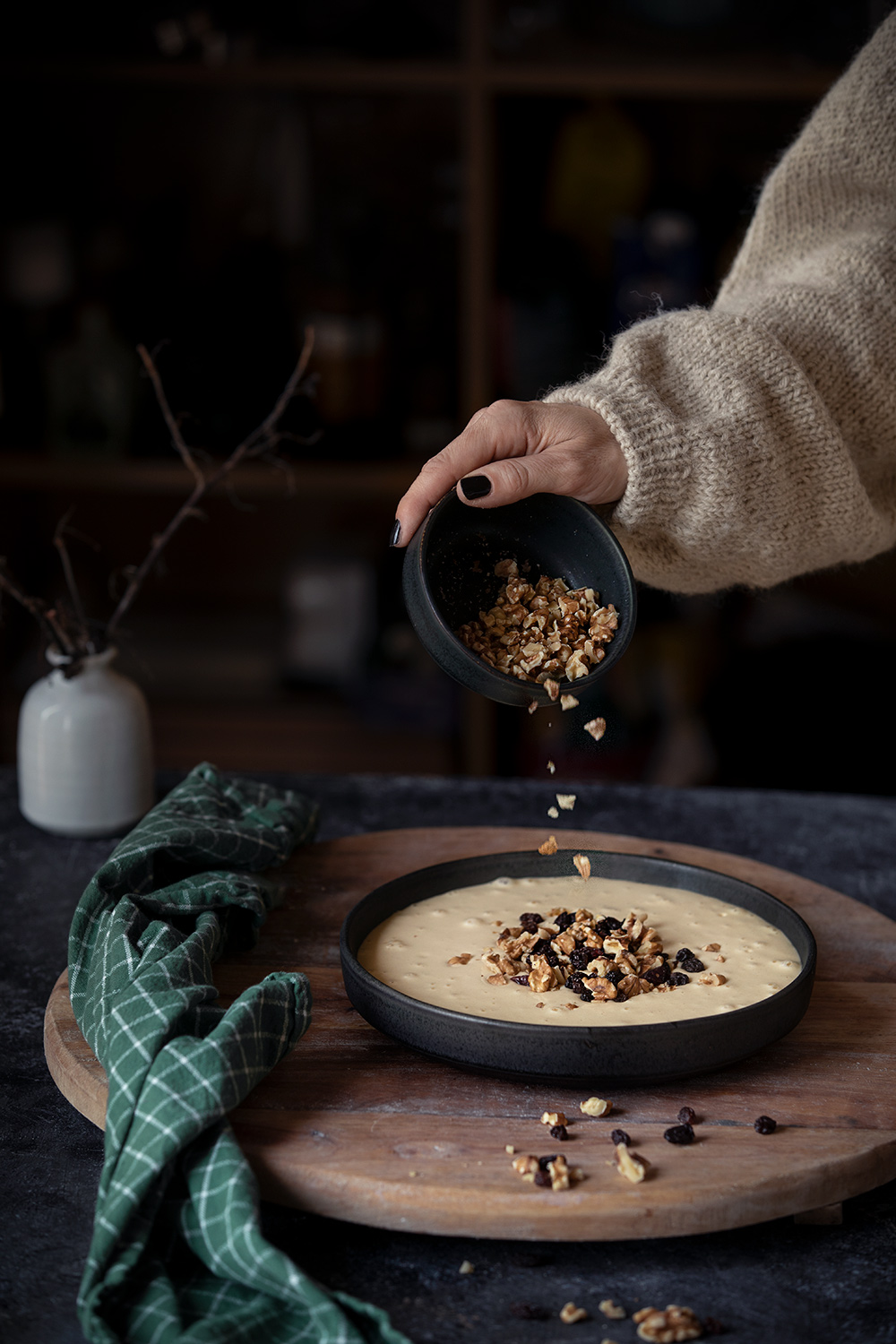
10. The batter will become noticeably heavier once the additions are incorporated. This is normal, but avoid mixing it longer than necessary.
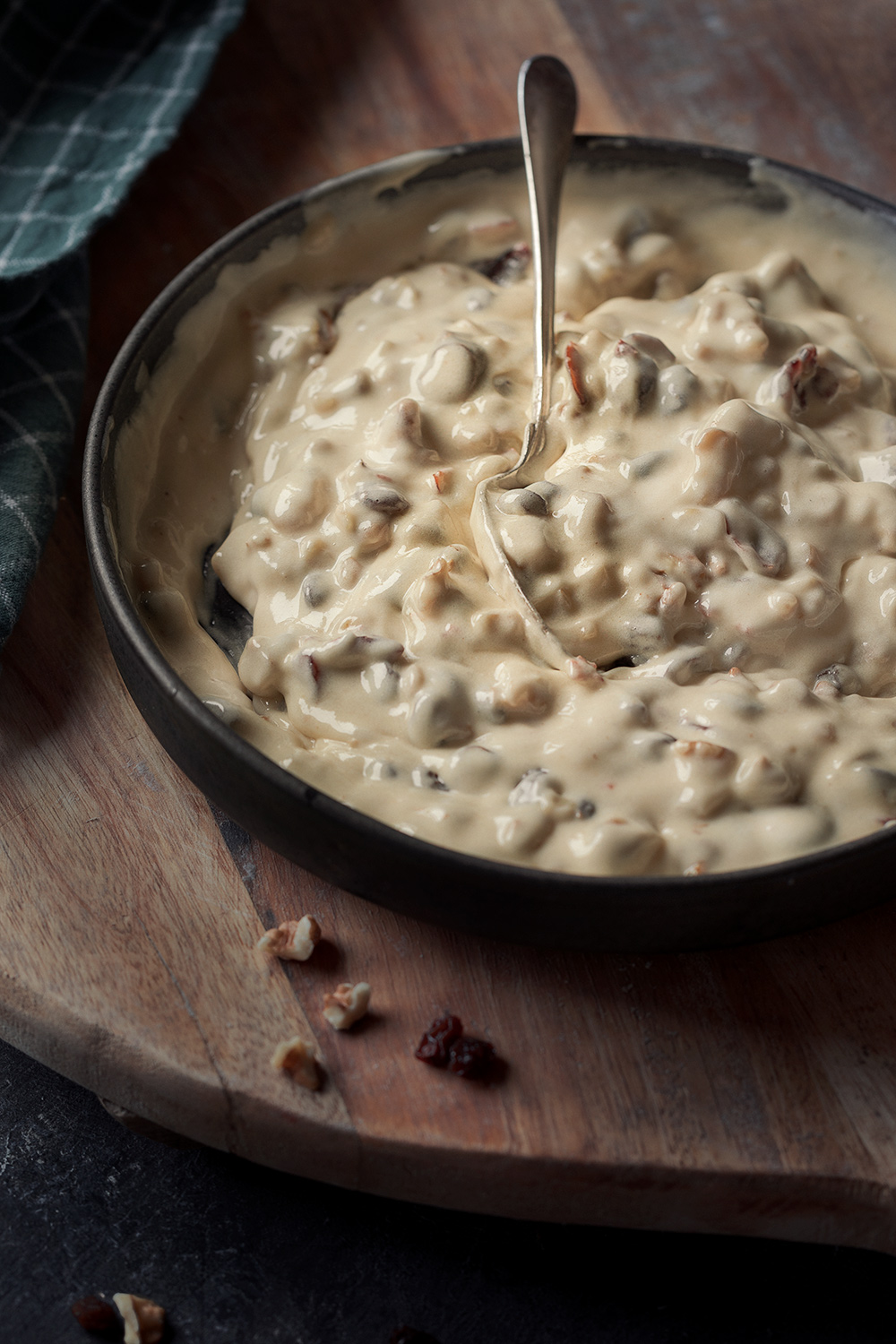
11. Transfer the batter to the prepared tin and spread it evenly, paying particular attention to the corners.

12. Bake for 35–40 minutes, until the surface is golden brown and the centre is set.
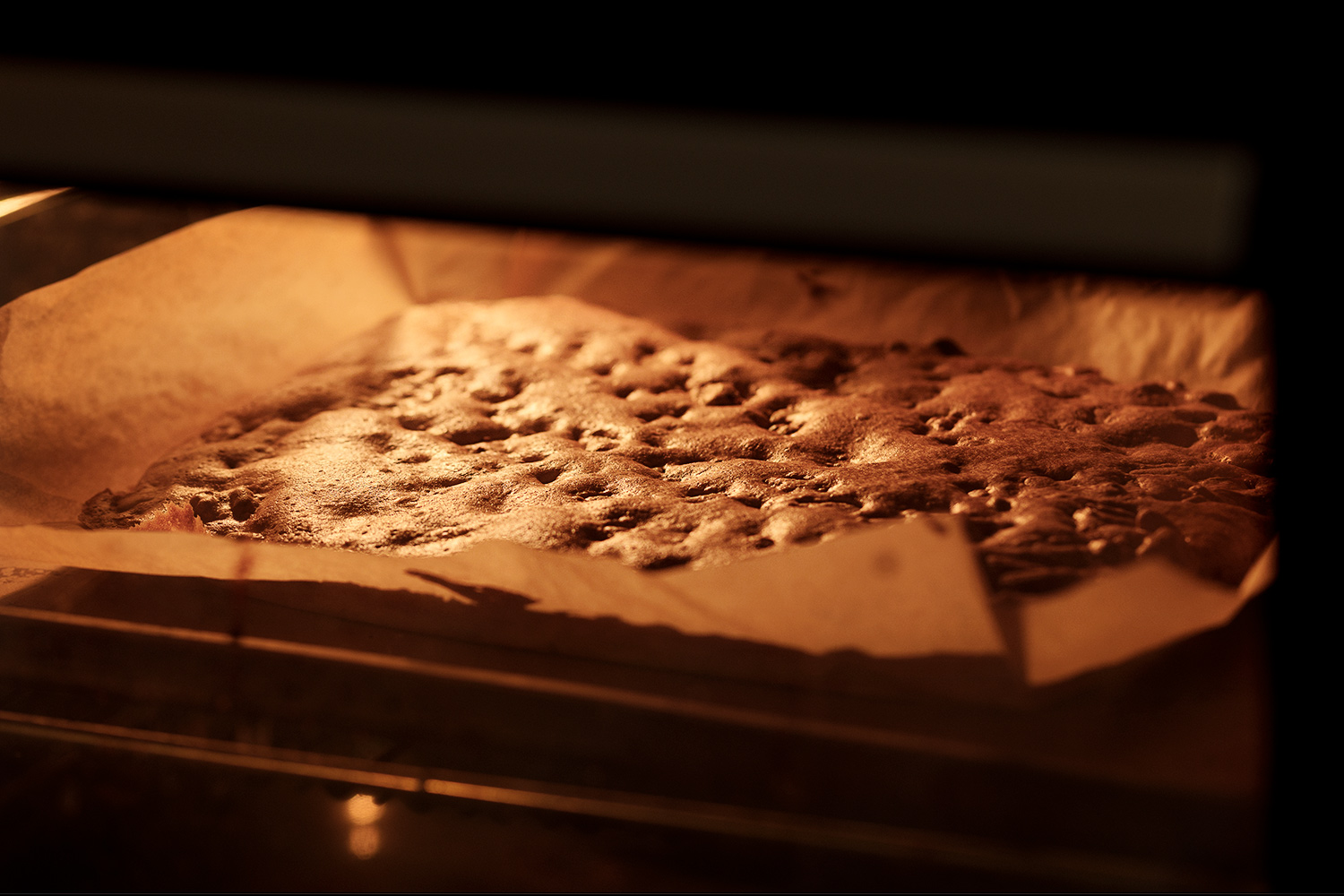
A wooden skewer inserted into a section of cake rather than directly into a raisin should come out without wet batter.
13. While the cake is still hot, use a sharp knife to cut it into diagonal strips and then in the opposite direction to create diamond-shaped pieces. Allow the pieces to cool before removing them from the tin.
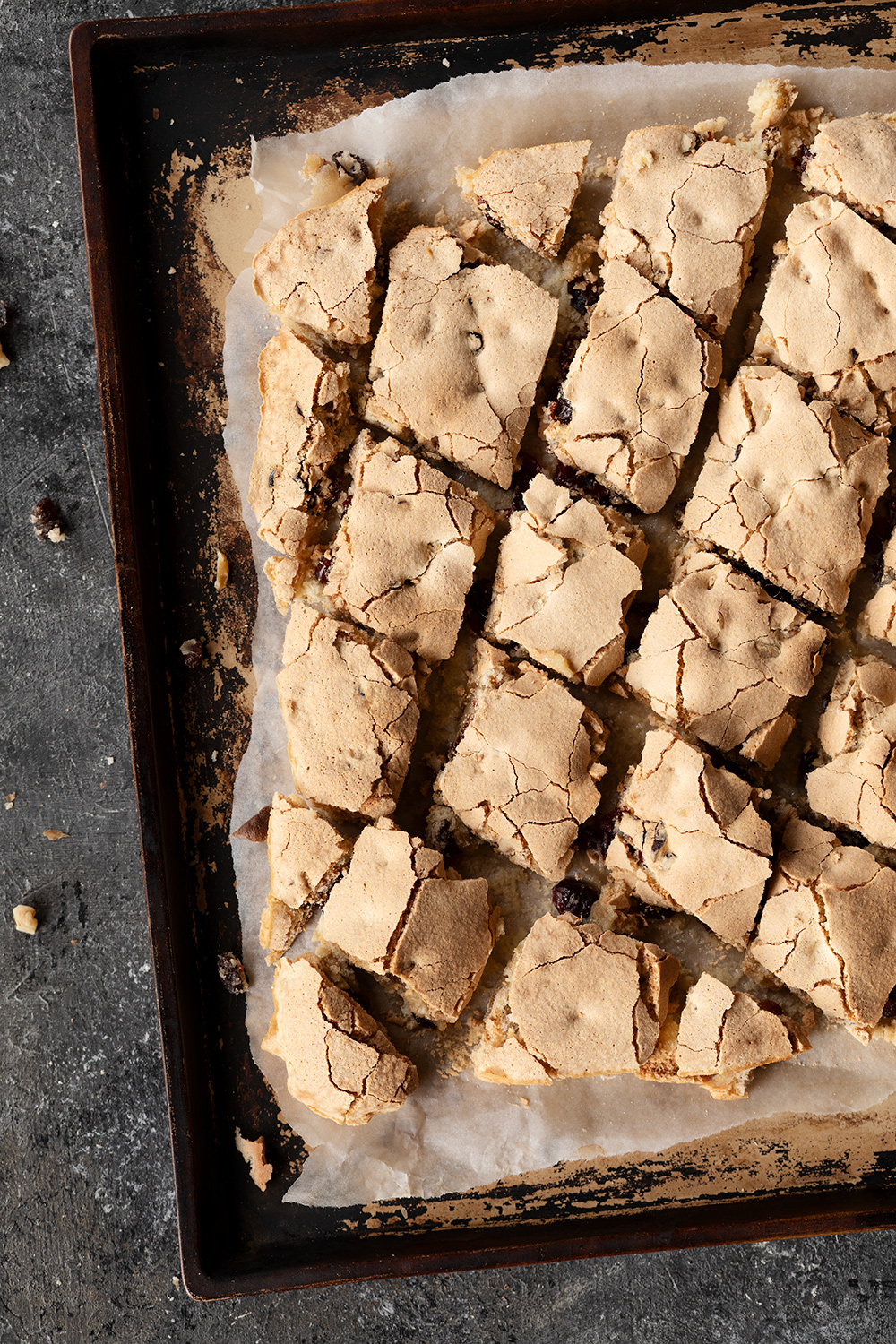
Ingredient Substitutions
What Can I Use Instead of Raisins?
Dried cranberries are my preferred alternative. Their acidity gives the cake a brighter flavour and balances its sweetness particularly well.
Replace the raisins with the same weight of:
- dried cranberries;
- dried sour cherries;
- chopped dried apricots;
- a mixture of raisins and cranberries.
Large dried fruits should be cut into pieces roughly the same size as a raisin.
Fresh berries and juicy fresh fruit are not direct substitutes because they release considerably more moisture into the batter.
What Can I Use Instead of Walnuts?
Pecans are the simplest one-to-one replacement. They have a sweeter, rounder flavour and a slightly more delicate texture.
Other possible substitutions include:
- hazelnuts;
- almonds;
- a mixture of walnuts and pecans.
Keep the nuts fairly coarsely chopped so that their texture remains noticeable after baking.
Can I Add Spices?
The original cake needs no additional flavouring, but small additions can create useful variations.
Try:
- finely grated orange zest with dried cranberries;
- a little cinnamon with raisins and walnuts;
- vanilla with pecans;
- a small pinch of cardamom with dried apricots.
Use restraint: the flavour of the toasted nuts and dried fruit should remain central.
Tips for the Best Texture
Use room-temperature eggs
Room-temperature eggs generally whip more readily and help create a stable, voluminous mixture.
Fold rather than stir
Once the flour has been added, use a spatula instead of the mixer. Fold only until the batter is smooth.
Dry the raisins thoroughly
Wet raisins can add unwanted moisture and make the crumb gummy around the fruit.
Do not chop the nuts too finely
Finely ground nuts disappear into the batter. Coarser pieces create a better contrast with the soft cake and chewy dried fruit.
Watch the colour
If the top becomes dark before the centre is ready, cover the tin loosely with foil for the final part of the baking time.
Can Mazurka Be Turned into Cookies?
I rediscovered this recipe while working on a large project devoted to cookies.
I hoped that Mazurka might be persuaded to become one: I spread the batter over a baking tray in a layer no more than one centimetre thick, planning to bake it, cut it into small pieces, and arrange them neatly in a box.
The experiment was not a success — at least, not in the way I had intended.
No matter how thinly I spread the batter, the finished layer remained unmistakably cake. It could be cut into small rectangles or diamonds, but it never acquired the dry, crisp, self-contained character of a cookie.
And so Mazurka remained a cake.
You know what? That is not such a bad thing after all. Some recipes seem to know perfectly well what they are.
How to Serve Mazurka Cake
Serve the cake completely cooled with tea or coffee.
Because it is sweet and generously filled with fruit and nuts, relatively small pieces are usually enough. The traditional diamond shape also makes it easy to arrange on a large plate or serve as part of a selection of small cakes.
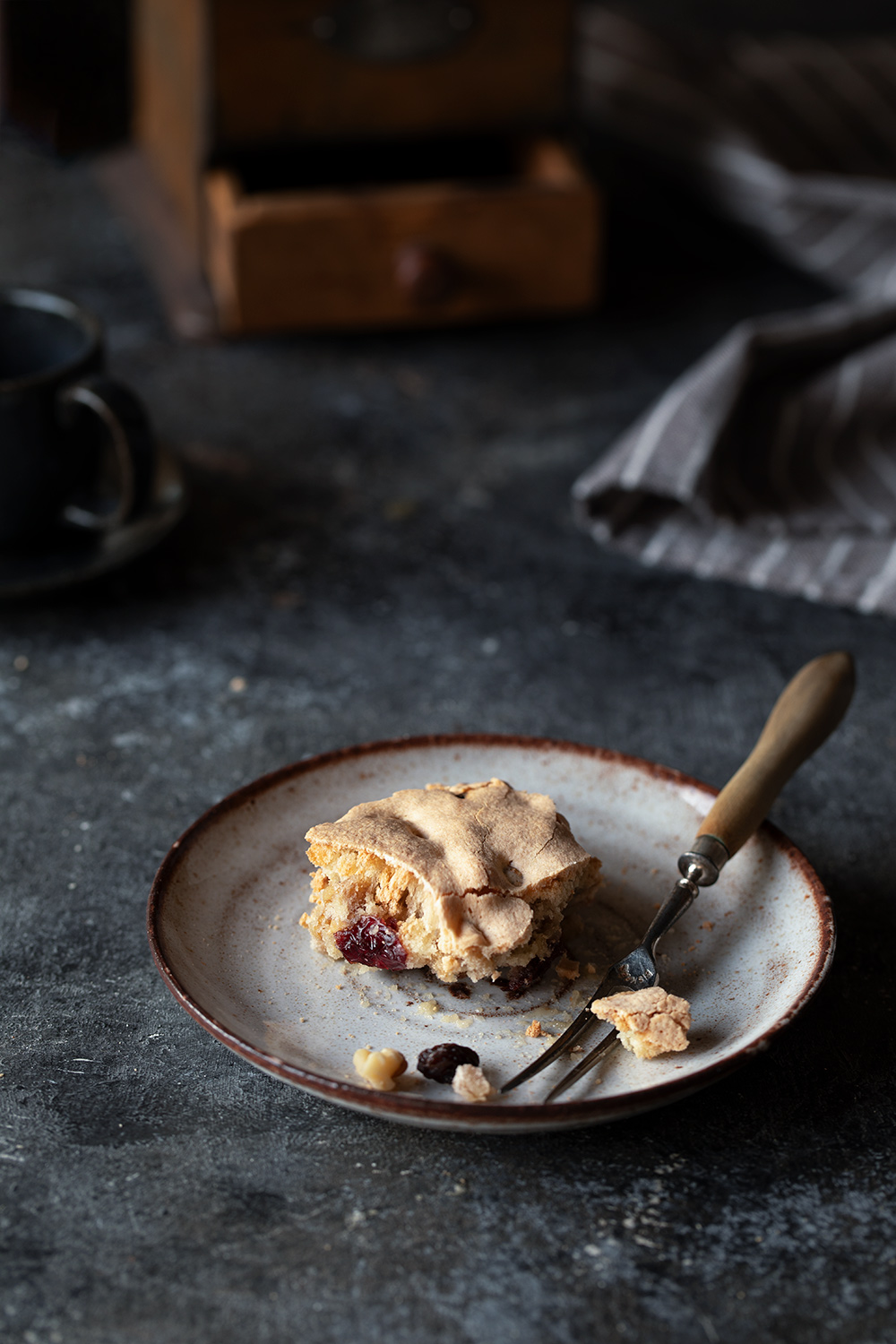
For a simple finish, dust the cooled pieces lightly with icing sugar. The cake is also good without any decoration: its golden surface, dark raisins, and visible pieces of walnut provide enough texture on their own.
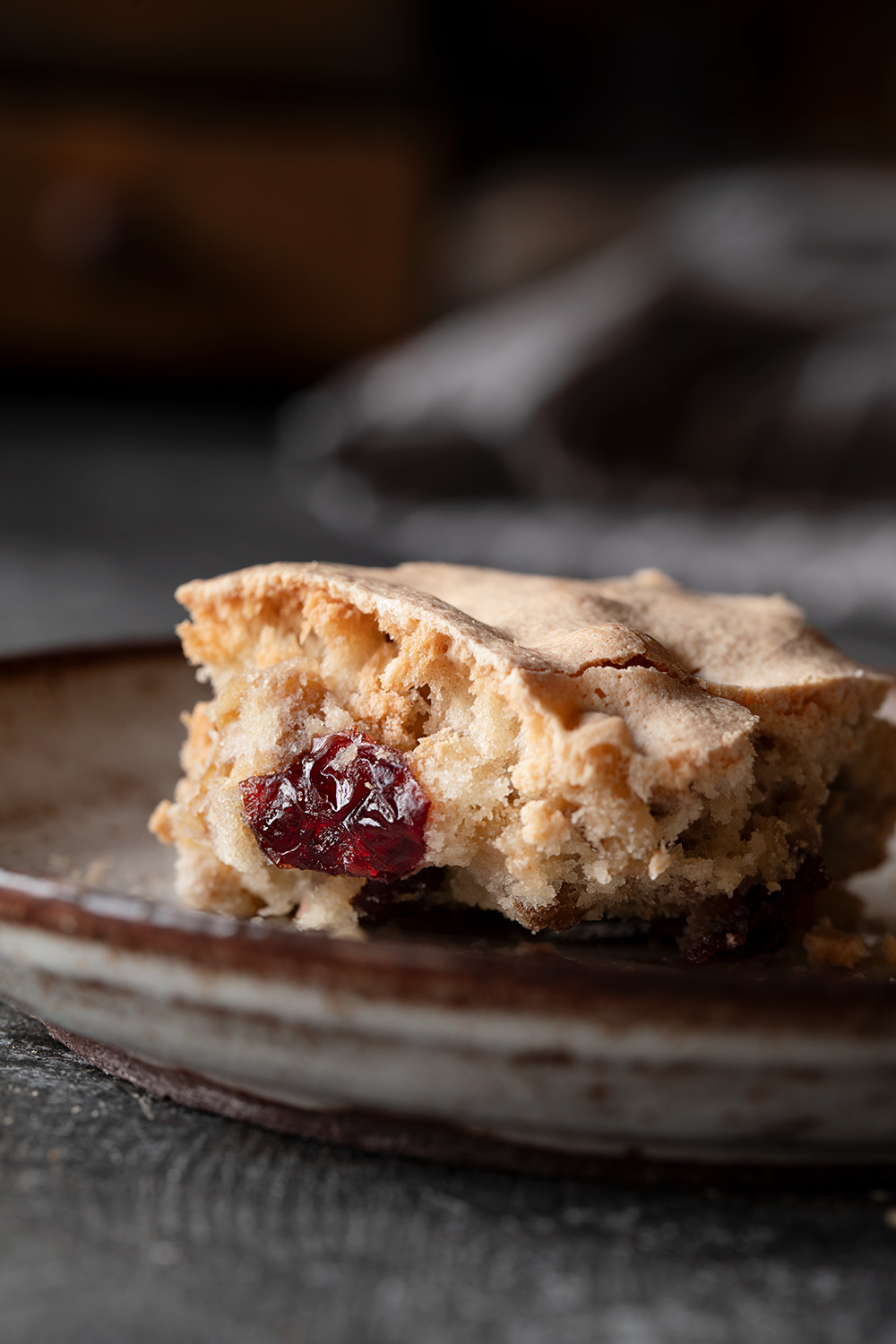
Conclusion
Some childhood recipes remain with us not because they are spectacular or technically complicated, but because they quietly belong to the landscape of home.
For me, Mazurka will probably always be connected with that brown metal tin, raisins, walnuts, and the familiar geometry of diamond-shaped pieces.

I tried to turn it into something else, and it refused.
So the cake remains a cake — and perhaps that is precisely why it is still worth making.
Easy Raisin and Walnut Cake
Ingredients
- 3 large eggs preferably at room temperature
- 220 g sugar
- 150 g all purpose flour
- 100 g walnuts coarsely chopped
- 130 g raisin
- a pinch of salt
Instructions
- Preheat the oven to 180 °C / 350 °F.
- Line a 20 × 30 cm rectangular baking tin with parchment paper, leaving a little overhang at the sides if you would like to lift the cake out more easily.
- Rinse the raisins and pat them thoroughly dry with a clean kitchen towel or paper towels. Any excess water can make the batter unnecessarily wet.
- Coarsely chop the walnuts. The pieces should be small enough to distribute evenly through the cake but large enough to remain visible in the finished crumb.
- Place the eggs and sugar in a large mixing bowl.
- Beat with an electric mixer until the mixture becomes very pale and thick. Depending on the mixer, this will usually take approximately 3-5 minutes.
- Sift the flour together with the salt.
- Add it to the egg mixture in two or three additions, folding gently with a spatula after each one. Use broad movements from the bottom of the bowl upwards and stop as soon as no dry streaks remain.
- Fold in the chopped walnuts, followed by the raisins.
- The batter will become noticeably heavier once the additions are incorporated. This is normal, but avoid mixing it longer than necessary.
- Transfer the batter to the prepared tin and spread it evenly, paying particular attention to the corners.
- Bake for 35–40 minutes, until the surface is golden brown and the centre is set. A wooden skewer inserted into a section of cake rather than directly into a raisin should come out without wet batter.
- While the cake is still hot, use a sharp knife to cut it into diagonal strips and then in the opposite direction to create diamond-shaped pieces. Allow the pieces to cool before removing them from the tin.
More cake recipe from this blog

No-Bake Quark Cookie House Cake with Chocolate Ganache (Easy Dessert)

How to Make Milchmädchen, Gentle Milky Girl Cake

Jaw-dropping Mug Cake to Make for a Long Hike

Amazing Bird’s Milk Cake Recipe and its Agar-based Version

Magnificent Black Forest Cake and its Version with Stunning Decorations

How to Make Shrovetide Cake

Famous Runeberg Cake – Its Modern Vanilla Mousse & Berries Interpretation

Decadent Chocolate Bundt Cake With Rich Flavor and How to Remove it from Pan
